Shopper Engagement: Why Shoppers Ignore Your Product (Even When It’s Right in Front of Them)

Rod Smith
Managing Director, Engagement Group
July 2, 2026
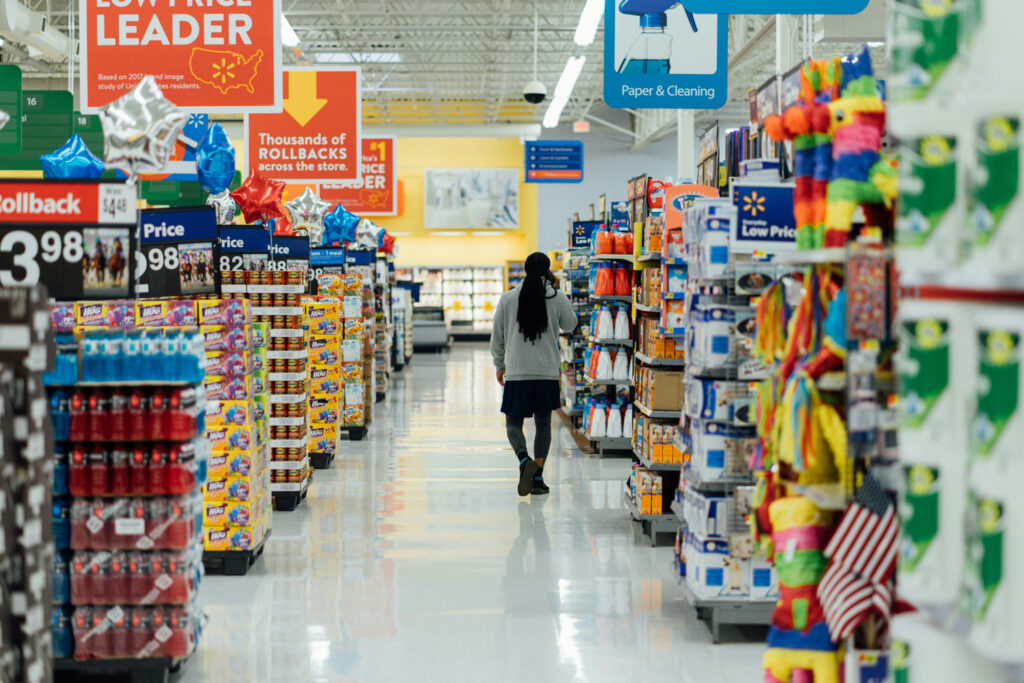
Most brands assume that if a product is on the shelf, shoppers will see it. Unfortunately, that is not how shopping behaviour works.
Every day, shoppers walk past hundreds, sometimes thousands, of products without consciously noticing them. Many of those products are stocked correctly, priced appropriately, and positioned in the right category. Yet they still fail to attract attention.
Why?
Because visibility and attention are not the same thing.
At Engagement Group, we regularly see brands invest heavily in product development, packaging, and retail distribution, only to discover that shoppers are simply not engaging with the product in-store. The issue is often not availability. It is psychology.
Understanding how shoppers process information helps explain why some products get noticed while others become invisible, even when they are sitting directly in front of potential buyers.
This article explores the psychology of shopper engagement and how brands can improve product visibility through stronger in-store and visual merchandising and retail displays.
The Myth of “If It’s On the Shelf, It Will Sell”
One of the biggest misconceptions in retail is that shelf presence automatically leads to sales.
In reality, shoppers do not evaluate every product they pass.
The human brain is designed to filter information aggressively. If it did not, shopping would become overwhelming.
Instead, shoppers rely on mental shortcuts to decide:
- What deserves attention
- What can be ignored
- What looks familiar
- What feels relevant
The result is that many products never make it into a shopper’s consideration set, regardless of quality or price.
This is where effective in-store merchandising becomes critical.
The Science of Attention Blindness
One of the most powerful psychological concepts affecting retail sales is attention blindness.
Attention blindness occurs when people fail to notice something visible because their attention is focused elsewhere.
You have probably experienced this yourself. You search a shelf for a product, fail to see it, then realise it was directly in front of you the entire time.
The product was visible.
It simply failed to capture your attention.
Why This Happens In the Retail Store
Shoppers enter stores with objectives.
They are focused on:
- Completing a shopping list
- Staying within budget
- Managing time
- Comparing options
Because their attention is limited, they naturally ignore large amounts of visual information.
Products that fail to stand out become part of the background.
What This Means For Brands
Being stocked is not enough.
Products must capture the shopper’s attention without creating confusion; clear visual elements are essential to do so without adding friction.
This is where visual merchandising plays a vital role.
The key is to enhance the in-store experience in a way that supports the brand’s image rather than overwhelming shoppers.

Choice Overload Is Making Products Invisible
Retailers often assume that offering more choice improves the shopping experience.
In reality, too much choice can have the opposite effect.
Psychologists refer to this as choice overload.
When shoppers are presented with too many similar options, decision-making becomes harder.
As complexity increases:
- Engagement decreases
- Confidence decreases
- Purchase hesitation increases
In some cases, shoppers leave without deciding at all.
How Choice Overload Affects Product Visibility
Imagine a shelf containing 40 nearly identical products.
Even if your product is competitively priced and well packaged, poor layout around certain products can make it blend into the shelf.
The more visual noise surrounding it, the harder it becomes to notice. In a retail store, shelf organisation shapes how shoppers scan options.
Improving Product Visibility
Strong retail displays help simplify decisions by improving store layout and making specific products easier to compare:
- Creating clear focal points
- Highlighting hero products
- Organising products logically
- Reducing visual clutter
A clearer point of purchase or purchase display can also increase impulse purchases.
The goal is not simply to attract attention. It is to make decisions easier.
Visual Hierarchy Determines What Shoppers Notice First
Not all products receive equal attention.
The brain naturally scans retail environments in predictable ways.
This process is known as visual hierarchy.
Visual hierarchy determines:
- What shoppers notice first
- What they notice second
- What they ignore completely
Elements That Influence Visual Hierarchy
Effective visual merchandising uses:
83% of information processed by our brains comes from sight.
- Eye-level placement
- Product blocking
- Contrast
- Signage
- Lighting
- Display structure
Without visual hierarchy, visual merchandisers use these cues to reflect the brand in a consistent way instead of letting every product compete equally for attention.
When everything tries to stand out, nothing stands out.
Why Some Retail Displays Perform Better
The highest-performing retail displays guide the shopper’s eye deliberately. Even digital displays can help here, and 63% of consumers say digital signage catches their attention.
They create a clear visual path that:
- Captures attention
- Communicates value
- Encourages action
Used well, interactive displays can reinforce messaging and improve the customer experience when they support the display instead of distracting from it.
The best displays feel effortless because they remove cognitive work from the shopper.
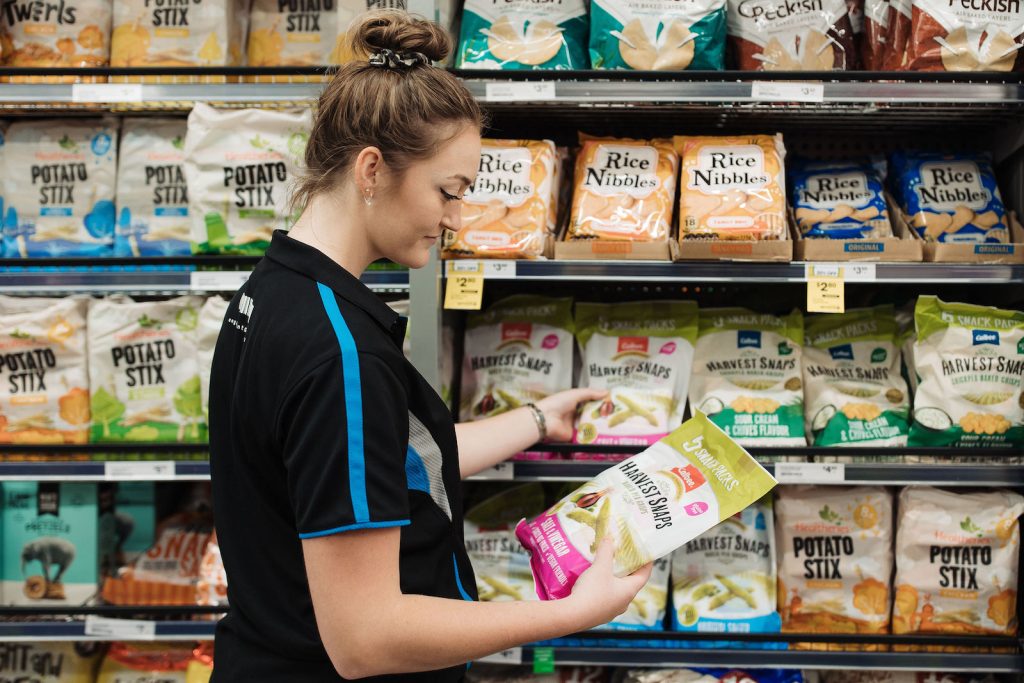
Familiarity Often Beats Visibility
Another reason shoppers ignore products is familiarity bias.
People naturally gravitate toward products they recognise.
When shopping under time pressure, shoppers often choose familiar brands because it reduces risk.
This creates a challenge for:
- New products
- Smaller brands
- New packaging designs
- Emerging categories
How Brands Can Overcome Familiarity Bias
Strong in-store merchandising can help bridge the trust gap by using:
- Secondary displays
- Educational signage
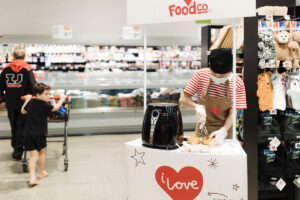
- Sampling programs
- Brand ambassadors
- Strategic product adjacencies
Sampling can increase brand recall by 30% and customer retention by over 50%, which helps unfamiliar products feel less risky. High-quality personalised service builds trust with shoppers and can help cross-sell complementary items.
The goal is to make unfamiliar products feel easier to evaluate.
Why Packaging Alone Is Not Enough
Many brands assume packaging will do all the work.
Packaging matters, but it rarely operates in isolation.
A beautifully designed product can still disappear if:
- Shelf placement is poor
- Adjacent products dominate attention
- Signage is missing
- Displays are cluttered
Product visibility is shaped by the broader store environment and store design, not packaging alone. Every visual element around the product affects whether shoppers engage.
The Shelf Is a Competitive Environment
Every product competes against:
- Other brands
- Promotional signage
- Category clutter
- Shopper distraction
In a busy retail space, the shop context determines how well merchandise stands out.
Success depends on how well the product works within that environment and fits the wider range on the shelf, not just how attractive the packaging looks on its own.

The Three-Second Rule
One of the simplest ways to evaluate shopper engagement is to apply the three-second rule.
Ask yourself:
Can a shopper understand this product within three seconds?
Online, the same pattern shows up fast: 68% of visitors leave product detail pages in 8 seconds.
Within those few seconds, shoppers should be able to identify:
- What the product is
- Why it matters
- Whether it is relevant to them
- How much it costs
That means product details and features need to be clear immediately.
If the answer is unclear, attention is often lost before consideration even begins.
Why Strong Retail Displays Increase Shopper Engagement and Increase Sales
Effective retail displays do more than showcase products.
They create visual shortcuts.
Effective visual merchandising can increase sales by 5-15% because it makes products easier to find and evaluate.
Displays help shoppers:
- Navigate categories faster
- Compare products more easily
- Identify promotions quickly
- Understand product benefits
Strong displays also drive traffic and bring more shoppers deeper into the store.
This increases shopper engagement while reducing decision fatigue.
Characteristics of High-Performing Retail Displays
The best retail displays are:
- Easy to understand
- Visually clean
- Fully stocked
- Clearly priced
- Regularly maintained
Well-maintained displays can increase sales by up to 30% when execution stays consistent.
Importantly, they continue performing long after installation because they receive ongoing support, and regular maintenance is essential in the retail industry.
The Hidden Impact of Poor In-Store Visual Merchandising
Many visibility problems are not caused by major mistakes.
They result from small execution issues that accumulate over time.
Examples include:
- Missing shelf tickets
- Low stock levels
- Incorrect facings
- Planogram drift
- Cluttered displays
Individually, these issues seem minor.
Collectively, they reduce product visibility and weaken shopper engagement.
Over time, this directly affects retail performance.

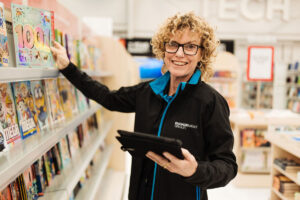
How Brand Ambassadors Influence Attention
Human interaction remains one of the most effective ways to overcome attention blindness.
Brand ambassadors create engagement by:
- Starting conversations
- Explaining product benefits
- Encouraging trial
- Answering questions
Positive customer interactions can also drive word-of-mouth and encourage positive reviews.
This helps products move from being overlooked to being actively considered. Stronger engagement often lifts average order value and can increase visit frequency.
For new products especially, this kind of human support can dramatically improve visibility and conversion during a new product launch or product launch.
A Quick Product Visibility Audit
If your product is underperforming, ask the following questions:
Visibility
- Is the product easy to find?
- Is it positioned at eye level?
- Are window displays or digital displays being used to highlight products and stop passers-by?
- Does it stand out within the category?
63% of consumers notice digital signage in stores, so assess visibility beyond the shelf alone.
Presentation
- Is pricing clear?
- Are signage and messaging clearly present in-store exclusives or personalised offers?
- Are shelves fully stocked?
- Is the display clean and compliant?
Personalised offers can lift conversion rates by 459%, so presentation quality matters.
Shopper Engagement
- Does the display communicate value quickly?
- Is there a clear reason to choose the product?
- Are shoppers encouraged to interact with the brand?
- Do the display or staff create an emotional connection strong enough to continue after purchase?
Engaged shoppers bring in 23% more revenue, so measure engagement beyond the initial sale.
Post-purchase follow-up helps strengthen relationships beyond the purchase.
Often, the problem is not demand. It is discoverability.
Final Thoughts
One of the biggest lessons in retail is that visibility does not guarantee attention.
Every day, shoppers ignore products that are technically in the right place because attention is limited, choices are overwhelming, and visual environments are crowded.
Brands that understand shopper psychology gain a significant advantage when displays reflect the target audience and the services or experiences that matter most to them.
Through stronger in-store merchandising, more effective visual merchandising, better retail displays, and a focus on genuine shopper engagement, products become easier to notice, easier to understand, and ultimately easier to buy.
For example, stores with cafes saw a 6.82% increase in total spend. Over 75% of consumers believe brands should contribute to social issues, so messaging should consistently reflect those values.
At Engagement Group, we help brands improve product visibility through disciplined in-store execution, merchandising support, and shopper-focused retail strategies that drive real results.
If you want your products to stand out and capture more shopper attention in-store, contact our team today.
About the Author