Retail ROI: What Actually Drives Measurable Retail Growth

Rod Smith
Managing Director, Engagement Group
May 28, 2026
Retail execution is often treated as an operational function. But high-performing brands understand something important.
Execution is not just an activity. It is an investment, and understanding return on investment is what shows which strategies generate profit and where a business should allocate resources.
As brands review budgets approaching the end of the financial year, more leadership teams are asking a critical question:
“What is the actual ROI of in-store execution?”
At Engagement Group, we see this shift happening across the New Zealand retail industry. Businesses are moving beyond measuring effort and starting to measure commercial impact.
That is where the conversation changes.
The real value of merchandising services and field merchandising is not how many retail store visits were completed or displays were installed. It is the measurable effect execution has on retail sales, visibility, shopper engagement, and long-term growth. In retail stores, execution includes product placement, pricing, promotions, and inventory management that help products stand out on shelves and move customers toward purchase.
This article breaks down what actually drives retail ROI and how brands should evaluate in-store execution heading into the next financial year.
Retail Execution Is Not a Cost Centre
One of the biggest mistakes brands make is viewing retail execution purely as operational spend.
In reality, strong retail execution directly influences:
- Sales conversion
- Shopper confidence
- Product visibility
- Retailer relationships
- Long-term retail growth
Poor execution creates revenue leakage.
Strong execution protects and grows revenue.
The difference between the two is measurable.
Activity Does Not Equal Outcome
A common issue in retail reporting is measuring activity instead of impact.
Brands often track:
- Number of store visits
- Displays installed
- Hours worked
- Compliance reports completed
While these metrics matter operationally, they do not automatically prove retail ROI.
The real question is:
“What commercial result did the execution create?”
What Actually Drives Retail ROI and Sales Performance In-Store
Retail ROI comes from improving the moments that influence purchase decisions.
The highest-performing merchandising services focus on execution areas that directly impact shopper behaviour and retail sales. In-store retail merchandising creates the environment for customer engagement and a better customer experience, helping retailers engage shoppers and maximise sales, especially when 70% of purchase decisions are made in-store. Effective strategies also depend on product placement, pricing, promotions, and staff training to drive revenue and strengthen loyalty.
1. Shelf Availability and Inventory Management
Products cannot sell if they are unavailable.
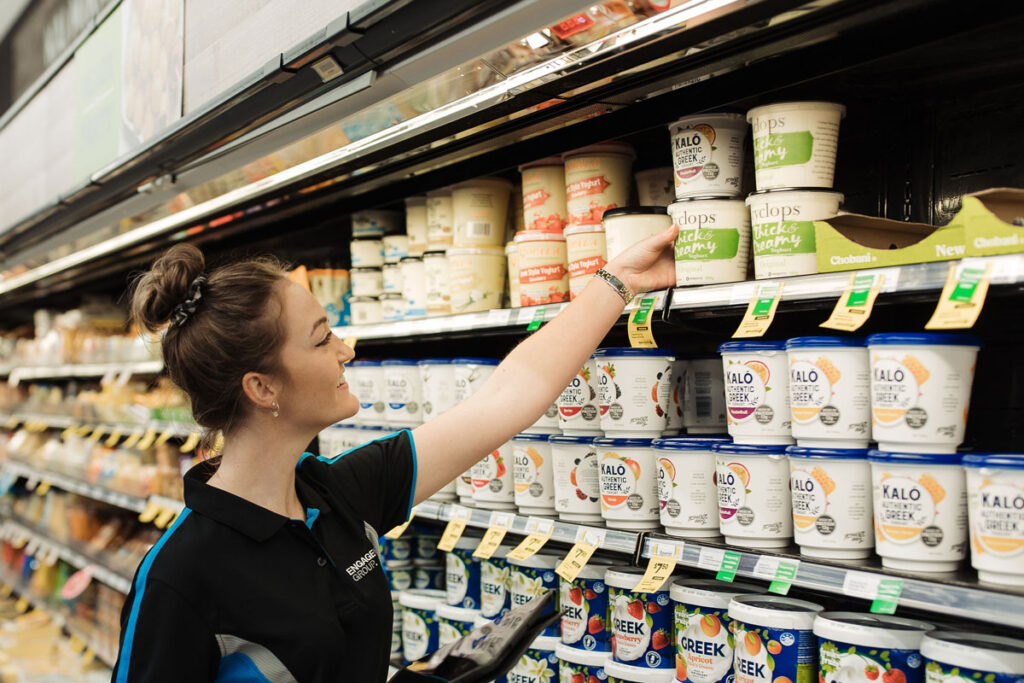
Out-of-stocks remain one of the biggest causes of missed retail sales across New Zealand retail environments.
Strong field merchandising improves inventory management by tracking stock levels, using data to spot shifts in demand, reordering when needed, and keeping products available when customers want them:
- Replenishment consistency
- Shelf health
- On-shelf visibility
- Priority SKU availability
In fact, 52% of consumer goods leaders want better visibility into inventory to prevent stockouts and improve sales performance.
Why This Matters Financially
Even small improvements in shelf availability can create significant sales uplift across multiple stores over time.
Protecting availability protects revenue.
2. Display Compliance
Displays only deliver ROI when they remain compliant after setup.
Many consumer goods companies struggle to deliver on in-store promotions because weak inventory visibility can trigger out-of-stocks and loss of sales, while poor adherence to merchandising and marketing plans reduces results.
Many brands measure display installation but fail to measure:
- Ongoing stock levels
- Presentation quality
- Pricing visibility
- Promotional maintenance
Displays that deteriorate quickly lose effectiveness just as quickly, and product displays lose impact fast when compliance slips.
What Strong Compliance Improves
Consistent display standards increase:
- Shopper engagement
- Product visibility
- Promotional effectiveness
- Retail conversion
This directly contributes to increased retail sales.
3. Better Product Visibility
Visibility drives purchase opportunity.
Strong retail execution ensures products are:
- Easy to locate
- Positioned correctly
- Presented clearly
- Supported with effective signage
Good visual merchandising and store layout also improve easy access to products, giving shoppers better access to what they need and creating a stronger experience for your target audience.
Field merchandising teams play a major role in protecting visibility across multiple store environments. Better visibility helps attract customers and encourages more purchases by making items easier to find in-store.
Why Visibility Matters for Customer Engagement
Shoppers make decisions quickly.
Products that are harder to find are less likely to be purchased, regardless of quality or price.
4. Faster Issue Resolution
One of the biggest advantages of professional merchandising services is speed of response.
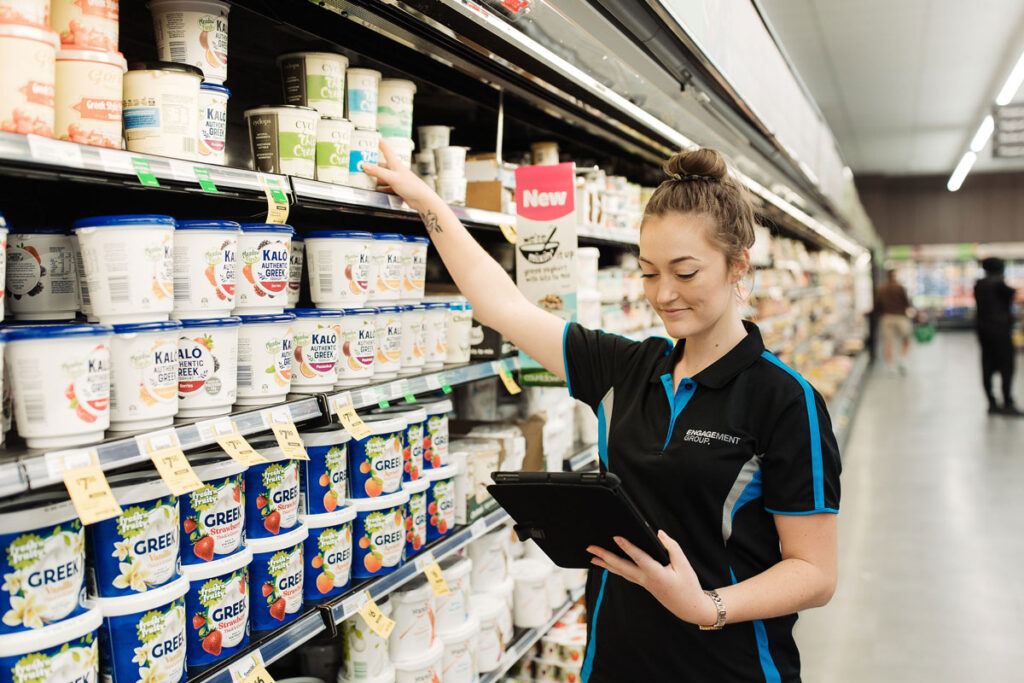
Without field visibility, execution problems often remain unnoticed for weeks. Even one week of unresolved issues can skew results, so retail investments should be measured over consistent time periods to allow fair comparison.
This includes the operational tasks and execution checks that field teams manage:
- Missing tickets
- Empty displays
- Planogram drift
- Incorrect pricing
- Secondary placement loss
The longer these issues remain unresolved, the greater the revenue impact becomes.
5. Consistency Across Stores
Retail growth is built on consistency, not isolated success.
Consistent support from employees in each retail store can lift conversion, and customers who are offered help spend 26% more per transaction.
Brands with strong retail execution maintain standards across:
- Different regions
- Different store formats
- Different retail environments
Consistency improves:
- Retailer trust
- Shopper confidence
- Brand perception
- Long-term retail sales performance
That kind of reliable service and execution also leads to more sales across locations.
Why Field Merchandising Delivers Measurable Value
Field merchandising creates accountability between strategy and real-world execution.
It closes the gap between:
- Head office planning
- Store-level reality
This visibility allows brands to:
- Identify issues early
- Protect promotional investment
- Improve execution quality
- Optimise retail performance continuously
The result is stronger retail ROI over time.
Measuring the ROI of Retail Execution Properly
Retail ROI should be measured against outcomes, not just activity. For example, location ROI equals (Net Sales from Location − Operating Costs) / Operating Costs × 100.
Key measurement areas include:
- Sales uplift by store
- Display compliance rates
- Shelf availability improvements
- Promotional performance
- Reduced out-of-stocks
- Increased conversion rates
- Retailer feedback
- Speed of issue resolution
GMROI is also a useful metric because it shows how much gross profit is generated for every dollar tied up in average inventory.
This creates a clearer understanding of how execution contributes to retail growth, helps teams make informed decisions, and supports a stronger measurement system. Cost of investment should include total spend, including shipping, installation, labour, warehousing, employee training, and software fees, so all costs are reflected. The right tools also make it easier to track performance accurately. ROI calculations should also account for qualitative gains such as brand loyalty, not only immediate hard returns.
EOFY Budget Planning: Where Brands Get It Wrong
Approaching EOFY, many businesses focus heavily on reducing operational spend.
But cutting merchandising support often creates hidden revenue loss later.
The brands that outperform usually do the opposite.
They invest more strategically in:
- Consistent field merchandising
- Retail optimisation
- Store-level accountability
- Ongoing execution support
Why?
Because execution directly influences sales performance.
Retail Growth Comes From Optimisation, Not Just Expansion
One of the biggest misconceptions in retail is that growth comes primarily from entering more stores.
In reality, many brands increase retail sales faster by improving execution within existing stores first. In 2024, U.S. retail sales are expected to grow 2.5% to 3.5%, reaching as much as $5.28 trillion, which is one more example of a healthy market where optimising current doors still matters.
Better execution creates:
- Higher conversion
- Better display performance
- Increased shopper engagement
- Stronger retailer confidence
- Improved sales productivity per store
A compelling brand story helps a company connect with consumers, strengthen trust, and support brand loyalty by building relationships with retailers and other partners while staying aligned with market trends. Loyalty programs that reward repeat purchases are another way retailers can lift retention and sales as market conditions shift.
This is where the strongest retail ROI is often found.
Final Thoughts
The ROI of in-store execution is not theoretical.
It is measurable in:
- Sales performance
- Visibility
- Compliance
- Shopper engagement
- Retail growth
Brands that treat retail execution as a strategic growth driver rather than operational overhead consistently outperform those that do not.
At Engagement Group, we help brands improve retail ROI through disciplined field merchandising, consistent execution standards, and ongoing in-store support across New Zealand. If you want to strengthen retail execution and drive measurable retail growth in the next financial year, contact our team today.
About the Author