End of Financial Year Retail Sales Performance: Where Brands Lose Revenue Without Realising

Rod Smith
Managing Director, Engagement Group
May 26, 2026
As the end of the financial year approaches, most retail teams shift focus toward reporting, forecasting, budgeting, and performance reviews.
But while attention moves to spreadsheets and strategy meetings, something else often happens quietly in-store.
Execution standards begin to slip.
Displays lose impact. Replenishment slows. Shelf standards drift. Promotional compliance weakens. Small issues go unresolved for longer than they should.
Individually, these gaps may seem minor. Collectively, they create hidden revenue loss that directly affects retail sales performance.
At Engagement Group, we see this pattern every year across retail environments in New Zealand. The brands that miss EOFY targets are not always losing because demand has disappeared. Often, they are losing revenue through avoidable execution breakdowns happening on the shop floor.
This article explores where brands lose revenue leading into EOFY and how stronger retail execution and in-store merchandising can protect retail performance during one of the most important periods of the year.
EOFY Pressure Creates In-Store Blind Spots
The final months of the financial year place pressure on every part of the retail business.
Teams are focused on:
- Hitting sales targets
- Managing budgets
- Preparing reporting
- Reviewing category performance
- Planning the next financial year
As attention shifts upward toward strategic reporting, operational consistency in-store often weakens.
This is where retail optimisation becomes critical.
Strong retail execution in New Zealand requires ongoing attention at store level, especially during periods when internal teams are distracted by broader business priorities.
Revenue Loss Rarely Comes From One Big Problem
Most EOFY retail performance issues are not dramatic.
They are cumulative.
Revenue leaks happen through:
- Missed replenishment
- Poor display maintenance
- Incorrect pricing
- Reduced merchandising frequency
- Weak promotional execution
- Planogram drift
These small breakdowns create friction in the shopper experience and directly impact retail sales performance.
The challenge is that many of these issues develop gradually and often go unnoticed until EOFY reporting highlights weaker-than-expected results.
Missed Inventory Management and Replenishment Is One of the Biggest Hidden Revenue Leaks
One of the fastest ways to lose sales is through inconsistent shelf availability.
During busy EOFY periods, replenishment routines often become less consistent as store teams juggle competing priorities.
The result:
- Empty shelves
- Gaps in key SKUs
- Slow-moving backroom stock
- Reduced on-shelf availability
Preventing these shelf gaps requires a retail execution plan that covers inventory management, promotions, staff training, and data analytics, while also recognising that strategic product placement plays a crucial role in visibility, engagement, and conversion.
You cannot sell what shoppers cannot see.
Why This Matters More at EOFY
EOFY periods often involve:
- Increased promotions
- Heavier shopper traffic
- Greater sales pressure
- More aggressive retail targets
Without strong replenishment processes, displays and shelves sell down faster than they are refilled.
This creates false indicators of low demand when the real issue is execution, and it can also lead to lost sales during promotional peaks.
Tip: strengthen replenishment routines to capture more sales opportunities during high-volume periods.
Quick Retail Optimisation Tip
High-performing brands increase merchandising frequency during high-volume promotional periods rather than maintaining standard servicing schedules.
Display Compliance Weakens Faster Than Most Brands Realise
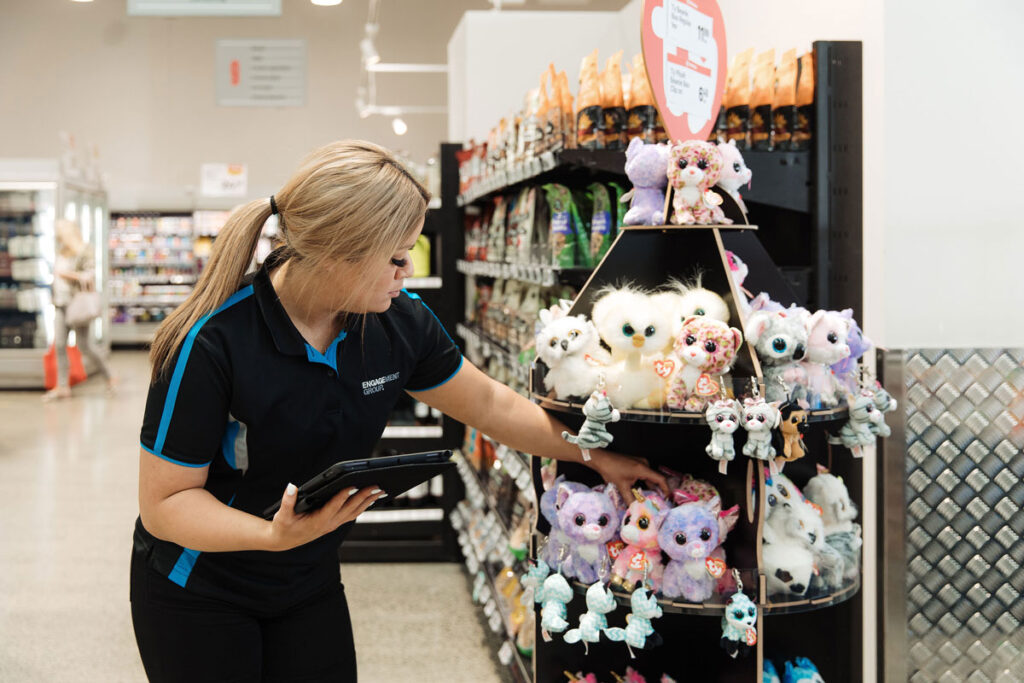
Displays are highly vulnerable during busy retail periods.
Even strong retail displays degrade quickly when:
- Stock levels drop
- Products are moved
- Pricing changes are missed
- Adjacent categories encroach on space
- Staff reprioritise tasks
The problem is not usually the initial setup. It is the lack of ongoing maintenance, because in-store displays play a central role in retail merchandising, and product displays directly affect visibility, customer experience, and conversion; in-store merchandising is at the heart of every successful retail business because it helps engage customers, influence purchase decisions, and increase sales by drawing shoppers in and guiding them toward a purchase.
The Difference Between Setup and Sustained Execution
Many brands invest heavily in:
- Display design
- Promotional creative
- Launch strategy
But far fewer invest equally in maintaining execution standards after launch.
This is where retail execution New Zealand teams create measurable impact.
Displays that remain clean, full, and compliant improve the customer experience and help influence purchase decisions, consistently outperforming product displays left unmanaged after installation.
Reporting Focus Can Pull Attention Away From the Shop Floor
EOFY creates an operational paradox.
The more businesses focus on performance reporting, the easier it becomes to lose visibility of what is actually happening in-store.
Head office may see:
- Planned promotional activity
- Approved displays
- Allocated stock
- Forecasted sales targets
But store-level reality can look very different.
This gap between strategy and execution is where retail sales performance often weakens. But far fewer invest equally in maintaining execution standards after launch, and many retailers still rely on disconnected or reactive processes instead of integrated solutions during EOFY, even though that depends on collaborative retailer partnerships, support such as training and promotional materials, and better visibility so field teams have access and easy access to current display and stock information.
Common EOFY Execution Gaps
Brands frequently discover:
- Promotional tickets missing
- Displays partially built
- Secondary placements removed early
- Incorrect product facings
- Out-of-stocks on promoted lines
Without regular field visibility, these issues remain hidden while revenue quietly slips away. That matters even more at EOFY, when the consumer goods industry spends about $200 billion a year on in-store promotions through retail execution, yet around 90% of companies still fail to deliver their promotions planning effectively.
Retail Execution Consistency Matters More During High-Pressure Periods
Retailers notice which brands maintain standards consistently in retail stores.
During EOFY periods, stores become more operationally stretched. Teams prioritise speed, immediate issues, and high-volume tasks.
Brands relying on “set and forget” execution lose visibility quickly, especially as competition intensifies.
Strong in-store merchandising protects:
- Brand presentation
- Shelf positioning
- Shopper confidence
- Promotional effectiveness
Consistency becomes a competitive advantage. In high-pressure EOFY conditions, effective retail execution is essential for profitable growth because visible, well-displayed products support repeat sales, stronger retailer relationships, and long-term brand loyalty. That discipline also improves the odds of success by reinforcing shopper loyalty when conditions are busiest.

Shopper Behaviour Changes During EOFY Periods
As budgets tighten approaching EOFY, shopper behaviour also changes.
Customers become:
- More price-conscious
- More selective
- Less patient
- More value-focused
This means execution quality matters even more. Understanding the customer journey helps retailers optimise the key touchpoints that shape consumers’ decisions during EOFY, improving sales and satisfaction as market trends shift.
If pricing is unclear, displays look messy, or products appear unavailable, shoppers move on quickly.
Strong Visual Merchandising Reduces Purchase Friction
Because many purchase decisions are made in-store, effective in-store merchandising is designed to engage customers and increase sales by helping shoppers:
- Find products faster
- Understand value quickly
- Make decisions with confidence
Poor execution increases hesitation, which reduces conversion.
Why Merchandising Services Become More Valuable at EOFY
EOFY is not the time to reduce execution support.
It is the time to strengthen it so brands can maximise sales and protect the customer experience in physical stores.
Professional merchandising services help brands maintain:
- Display compliance
- Stock availability
- Pricing accuracy
- Planogram consistency
- Promotional execution
This support, backed by technical expertise and store staff training, helps maintain standards across locations.
Most importantly, merchandising services provide visibility into what is actually happening in-store during periods when internal teams are stretched.
Retail Optimisation Is About Protecting Revenue, Not Just Driving Growth
Many brands view retail optimisation purely as a growth strategy, when it also plays a crucial role in protecting revenue and margins.
In reality, EOFY retail optimisation is often about preventing avoidable revenue loss.
Small execution improvements can protect:
- Sales momentum
- Promotional investment
- Retailer confidence
- Shopper engagement
Stronger pricing and execution decisions also help brands respond to competition and market trends.
The brands that finish the financial year strongly are usually the ones that maintain execution discipline while competitors become distracted.
EOFY Retail Execution Checklist
Before EOFY reporting begins, brands should assess retail merchandising standards across retail locations:
- Are displays fully stocked and compliant?
- Are promotional tickets accurate and visible?
- Is merchandising frequency aligned with sales activity and promotions planning?
- Are priority SKUs, especially core products, consistently available?
- Are planograms still being followed correctly?
- Is there visibility into real in-store conditions?
- Is pricing accuracy being reviewed against cost and margins?
These fundamentals have a direct impact on retail sales performance.
Final Thoughts
EOFY revenue loss rarely comes from one major failure.
It comes from small execution gaps repeated consistently across stores, weeks, and campaigns.
Missed replenishment, weak display maintenance, poor compliance, and reduced in-store focus all quietly erode performance over time.
At Engagement Group, we help brands maintain strong retail execution across New Zealand through disciplined in-store merchandising, field visibility, and ongoing support that protects retail sales performance when it matters most.
If you want to strengthen retail execution and reduce hidden revenue loss before EOFY, contact our team today.
About the Author