Planograms Explained: Why Product Placement Influences Buying Decisions

Rod Smith
Managing Director, Engagement Group
July 8, 2025

Enhance your retail strategy with effective planogram services and discover practical tips to boost efficiency and optimise product placement.
If there’s one thing I’ve learnt in my 20+ years working in retail and merchandising, it’s this: you can’t leave product placement to chance. The way products are arranged on a shelf isn’t just about aesthetics; it’s a strategic tool that influences what customers buy, how much they spend, and whether they’ll come back.
At Engagement Group, we’ve worked with brands big and small to implement effective planogram services and merchandising layouts designed to boost visibility and drive real sales growth. And while digital has changed the game, one thing remains constant: what shoppers see when they walk into a store still matters.
What Are Planogram Services and Why Should You Care?
A planogram is essentially a visual merchandising plan, a diagram that shows where and how products should be displayed on shelves to maximise sales. Good planograms take into account everything from product category and size to customer preferences, shopping patterns, and sales data. Understanding consumer behaviour and customer behaviour is essential for designing effective planograms that optimise product placement and drive sales.
Planogram services help brands and retailers develop and maintain these layouts. This ensures stores present products in a way that’s not only visually appealing but also commercially smart. Key elements of successful planogram design include analysing customer behaviour, shelf space allocation, product adjacencies, and traffic flow. It’s one of the simplest ways to increase retail sales without changing the product itself.
In a market like New Zealand, where retail remains highly competitive and consumer expectations are evolving, effective planogram services can give your brand an edge.
Why Product Placement Strategy Matters
Product placement strategy isn’t about guesswork. It’s about using data and insights to position products where they’re most likely to sell. Every shelf in a retail store has a value. Prime eye-level spots, high-traffic end caps, and front-of-store displays are considered prime locations that can dramatically enhance product visibility and influence what customers buy. Sales associates play a key role in executing these product placement strategies effectively.
For example, placing complementary products together like chips near dips, or shampoo next to conditioner naturally encourages multi-item purchases. Cross selling by sales associates, supported by strong product knowledge, can further increase average transaction value by suggesting relevant add-ons or higher-value alternatives. Positioning high-margin products at eye level increases their chances of being picked up. A good product placement strategy can mean the difference between average and excellent sales performance.
The Science Behind Retail Merchandising and Store Layouts

Retail merchandising layouts, the way products and categories are arranged within a store, guide how shoppers move through the space by shaping customer flow and influencing foot traffic throughout the entire store and retail space. The right layout can optimise how customers experience the store, ensuring they encounter key product offerings and encouraging them to explore more areas.
Examples of layout types include grid layout and grid store layout, commonly used in grocery stores to maximize store shelves and product organisation; loop layout, which guides shoppers along a continuous path for maximum exposure; herringbone layout, ideal for limited space environments; free flow layout, which encourages browsing and customer interaction; and mixed layout, which blends multiple configurations to enhance customers experience. Strategic features like the power wall can further boost product visibility and sales.
Incorporating visual breaks within the layout design provides customers with breathing room, making the shopping experience less overwhelming and more engaging. Thoughtfully allocating floor space and more space for product offerings and store shelves can significantly impact retail stores’ performance, allowing for better assortment, improved customer flow, and increased sales.
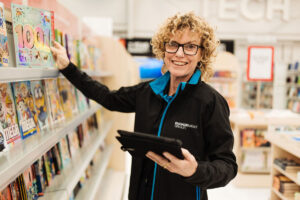
At Engagement Group, our merchandising team studies how customers navigate different store environments and uses those insights to help brands optimise their in-store presence. It’s about making it easy for people to find what they want and tempting them with things they didn’t know they needed.
Techniques for Shelf Space Optimisation
Shelf space optimization is all about making the best possible use of available shelf real estate. Shelf space optimisation and effective shelf space optimisation are a key component of retail success, helping retailers maximise sales and enhance the customer experience. By optimising shelf space, retailers can provide valuable insights into inventory turnover, product visibility, and customer satisfaction.
Our team uses real-time sales data and in-store reporting to update planograms and ensure shelf space is allocated to products that are performing. Modern shelf space optimisation tools provide valuable insights that help retailers make data-driven decisions, allowing us to respond to market trends, seasonal demand, and promotional activity, keeping your displays fresh and relevant.
How Planograms Help Boost Sales and Increase Retail Sales

At the end of the day, it’s about results. Well-executed planograms and thoughtful product placement strategies directly contribute to increased sales. Planogram services are a key retail sales strategy that can boost sales, maximise sales, and increase in store sales by optimising how products are displayed and accessed. They make it easier for customers to shop, enhance the in-store experience, and drive impulse purchases.
Here are some practical retail sales tips: use planograms to entice customers with attractive displays and cross merchandising, and focus on enhancing customer experience through clear signage and logical product flow. Enhancing customer experience is central to achieving more sales, as a well-designed store layout encourages longer visits and higher purchase volumes.
I’ve seen brands boost their sales by 20 to 30 percent simply by reorganising their shelf layout based on a smart planogram. It’s a simple, effective way to grow revenue without the need for heavy discounting or additional marketing spend.
Understanding Customer Profiles for Effective Merchandising
To create impactful planogram services and merchandising strategies, it’s essential to understand the customer profiles that frequent your retail store. Customer profiles are detailed representations of your target audience, encompassing demographics, shopping habits, preferences, and purchasing behavior. By analysing these profiles, retailers can tailor product placement and shelf space allocation to better meet customer needs and expectations.
For example, a store catering to young families might prioritise placing convenience items and complementary products within easy reach, while a boutique targeting fashion-conscious shoppers may focus on visual appeal and curated product groupings. Understanding customer profiles also helps in predicting customer flow and identifying which products are likely to generate impulse purchases.
Incorporating customer profiles into merchandising decisions ensures that the retail sales strategy resonates with shoppers, making them feel understood and valued. This approach not only enhances the customer experience but also drives higher sales by positioning the right products in the right places, ultimately maximising the average transaction value and encouraging repeat purchases.
How can we help your brand grow?
Get in touch with our team today for a free 30 minute consultation
Get StartedHow Planogram Services Support Retailers and Brands
Planogram services aren’t just for big multinationals. At Engagement Group, we work with everyone from emerging local brands to established global players because good merchandising benefits businesses of every size.
Our services include:
- Planogram development and implementation
- Product placement strategy advice
- Shelf space optimisation and category management
- Compliance reporting and store-level feedback
- Merchandising audits and retail execution support
- Merchandising strategies to optimize store layouts and displays
- Support for diversifying and updating product offerings
By combining national reach with a personal, hands-on approach, we help brands achieve consistent, high-quality merchandising execution. Our planogram services enable brands to reach their target market and target audience more effectively by tailoring product placement and store layouts to customer preferences.
We also support brands in retaining existing customers, attracting new customers, and encouraging repeat purchases through tailored merchandising strategies and optimised product offerings. By leveraging post purchase feedback and analysing past purchases, we help improve customer satisfaction and inform future merchandising plans.
Real-World Planogram Wins

I remember working with a snack food brand launching a new range of chips. Initially, the product was hidden low on a shelf and sales were sluggish. By implementing vertical merchandising, we adjusted the planogram to have the new product featured at eye level, increasing its perceived value and visibility. We also paired it with complementary products nearby. Sales tripled within a fortnight.
Another brand gained significant traction by using themed displays near the cash register and where customers check out for limited-time products. Placing products near the cash register on the sales floor can drive impulse purchases and improve the overall checkout experience. Optimising the sales floor layout and making efficient use of floor space not only enhances product visibility but also boosts the perceived value of the items on display. These quick wins are proof that the right shelf strategy can have an immediate impact.
Planograms in the New Zealand Retail Market
In a country like New Zealand, where shoppers value local products and have strong brand loyalty, tailoring planograms to suit regional preferences makes a difference. What works in Wellington may not work in Whangārei. That’s why our team prioritises local insights and collaborates closely with retailers to make data-backed, location-specific decisions.
Our experience in the New Zealand retail environment means we understand the subtle differences between urban and regional stores, and we tailor merchandising plans accordingly.
The Future of Product Placement and Merchandising

The future of retail merchandising layouts is increasingly data-driven. At Engagement Group, we’re leveraging technology and real-time reporting to build more effective planograms and merchandising plans. By combining sales data, consumer insights, and store-specific information, we can refine our strategies faster and more accurately than ever before. Analysing online sales trends and integrating mobile POS systems are now essential parts of modern planogram and merchandising strategies, helping to optimise both in-store and digital channels for maximum efficiency and customer convenience.
Social media and traditional advertising also play a crucial role in supporting product placement and enhancing brand visibility, offering advantages such as rapid audience engagement and subtle brand exposure. These advanced tools and marketing channels provide valuable insights that allow us to continually refine and improve our merchandising strategies.
As retailers embrace AI-powered analytics and digital shelf solutions, the basics of good product placement remain the same, but the tools to achieve it are evolving.
Why Partner With Engagement Group?
Choosing the right merchandising partner isn’t about who offers the lowest rates. It’s about trust, consistency, and proven results. At Engagement Group, we’re known for our reliable service, strong client relationships, and commitment to delivering value. Our clients stay with us because we make their brands look great in-store, and their sales show it.
With dedicated account managers, a trained nationwide team, and full service offerings including promotions and brand ambassadors, we’re well placed to support your retail execution needs.
Our Approach to Planograms and Product Placement
We don’t take a one-size-fits-all approach. Every planogram and product placement strategy we deliver is tailored to the brand, category, store format, and customer base. Our in-house team works closely with clients to understand their objectives and build merchandising plans designed for commercial results.
Final Thoughts
At its heart, effective merchandising is about giving your products the best possible chance to succeed. A smart product placement strategy, backed by solid planograms and real-time data, makes it easier for shoppers to find your products and increases the chances they’ll buy them.
If you’re ready to improve your in-store execution or want to explore how better shelf layouts can help increase retail sales, book a free 30-minute consultation with me today.
About the Author